Stores waste nutrients and water. Small ones in animal cells.
What Part Is Selectively Permeable In A Plant Cell Quora
Where is the partially permeable membrane.
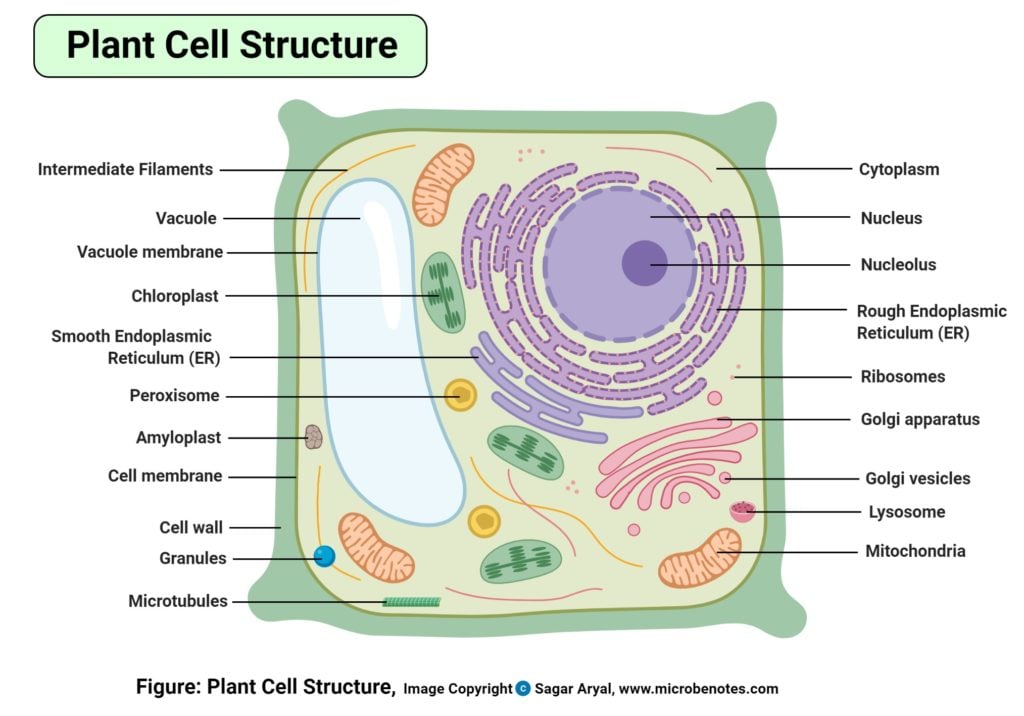
. Use the following terms in your answer. The fact that is has a partial permeability allows it to partake in one of its main functions - controlling what exits and enters the cell. Describe fully what will occur if a plant cell is placed in a solution that has a lower water potential than the cell.
Thanks to the structure of the membrane with the hydrophobic tails and hydrophilic heads the cellular membrane has selective permeability. The plant cell wall is permeable because it allows both solvent and solute molecules to pass through it. The plant cell wall is permeable because it allows both solvent and solute molecules to pass through it.
Osmosis and Semipermeable Membranes The semipermeable membrane limits the diffusion of solutes in the water. This is because the cell wall stops anything bad from coming into the cell. Semi-permeable lining that surrounds the cell holds organelles in where waste exits cell.
Cell Membrane is present in all organisms including plants The cell membrane is also known as the plasma membrane. PNG image 156png - FUNCTION OF THE PARTS OF PLANT CELL 1. Outside the cell membrane.
In plant cellist is difficult to see the membrane because it is right against the cell wall. Which part of the cell is permeable. Not surprisingly the aquaporin proteins that facilitate water movement play a large role in osmosis most prominently in red blood.
It has a selective permeability hence it regulates the contents that move in and out of the cell. The plant cell is surrounded by a cell wall which is involved in providing shape to the plant cell. It is located outside the cell membrane and is completely permeable.
This is because the cell. Use the following terms in. The cell wall is fully permeable to all molecules and supports the cell and stops it.
Cell walls provide support and. It is a rigid layer that is composed of cellulose glycoproteins lignin pectin and hemicellulose. In plant cells this not only tells us something about the cell membrane but also the state of the cell wall.
The most obvious of these is usually the nucleus. Proteins are the structures inside the cell membrane through which material passes. Plasma membrane is selectively permeable in nature meansit allows or permits the entry and exit of some minerals in and out of the cell and prevents the movement of some other materials.
The cell wall which is composed of amongst other things cellulose will be fully permeable. Which part of the plant cell is fully permeable. These plant cell membranes are semi-permeable and located between the cells interior and outer cell wall.
We all do not forget that the human body is quite. A membrane is said to be permeable to a substance if it allows the passage of the substance through it. Why is the cell wall fully permeable.
On the other hand cuticle layer is impermeable because it does not allow both the solvent and the solute particles to pass through it. The cell membrane sometimes is also called the plasma membrane. The primary function of a plant cell wall is to protect the cell against mechanical stress and to provide a definite form and structure to the cell.
Let us have a detailed look at the plant cell its structure and functions of different plant cell organelles. The cell wall is characteristic features of Plants and nucleated and non-nucleated bacteria. Cell wall freely permeable partially permeable cell surface membrane vacuole tonoplast cytoplasm solute potential pressure potential water potential incipient plasmolysis plasmolysed osmosis protoplast equilibrium.
The cell wall is freely permeable as it allows water and nutrients freely exchanged between the cells and. Plant cells such as those within trees bushes grasses and other plants do contain cell membranes. Are Cell Membrane Fully Permeable.
It also protects the cell from external damage and provides support and stability to the cell. This property is termed as permeability. Plant cells have a strong cellulose.
On the other hand cuticle layer is impermeable because it does not allow both the solvent and the solute particles to pass. The part of the plant cell that is fully permeable is the cell membrane. It provides structure and protection to the cell.
The part of the plant cell that is fully permeable is the cell membrane. Inside the cell membrane is a jelly-like substance called cytoplasm in which many small structures are found the organelles. Large ones are in plant cells.
0 The cell wall is fully permeable. In-plant cells the cell membrane separated the cytoplasm from the cell wall. CELL WALL 0 This is a strong covering made of cellulose.
Which part of a plant cell is semi-permeable. Cell wall freely permeable partially permeable cell surface membrane vacuole tonoplast cytoplasm solute potential pressure potential water potential turgid osmosis protoplast equilibrium b Describe fully what will occur if a plant cell is placedin a solution that has a lower water potential than the cell. Apart from the cell wall there are other organelles that are associated with different cellular activities.

Plant Cell Meaning Components Structure Functions Parts Embibe

Biology Notes For Igcse 2014 2022 3 2 Osmosis
Plant Cell Definition Structure Parts Functions Labeled Diagram



0 Comments